In fusion research, materials are pushed hard, measured precisely, and rarely given a second chance. At ENEA’s Eccimeri Laboratory in Frascati, that culture produced a UV irradiation capability designed for demanding plasma related work, where source stability, calibration, diagnostics and control matter at every step. Today, that same know how is helping the space industry answer a very different question, one with equally high stakes, how long can advanced materials survive unfiltered solar ultraviolet light in orbit.
The technology transfer brought ENEA’s ultraviolet irradiation expertise to Beamide srl, a spin off of INFN working on advanced materials for space applications. The transfer focused on endurance testing in the 200 to 400 nm range, with accelerated doses equivalent to up to 3,000 hours of extra atmospheric solar exposure. This was not a simple lab test. It combined dose calculation, detector calibration, spatial intensity mapping, continuous monitoring of UV intensity and sample temperature, and thermal management in vacuum and helium atmosphere.
The first industrial use came in projects developing a new generation of optical solar reflectors for spacecraft thermal control. These passive components play a central role in keeping satellites within their operating temperature window. ENEA’s facility was used to irradiate the coatings for 1,500 equivalent sun hours, in line with ESA and ECSS requirements. The same platform was later used to test transparent hybrid materials intended as substrates for secondary surface mirrors in space telescopes, this time with exposures lasting 3,000 equivalent sun hours.
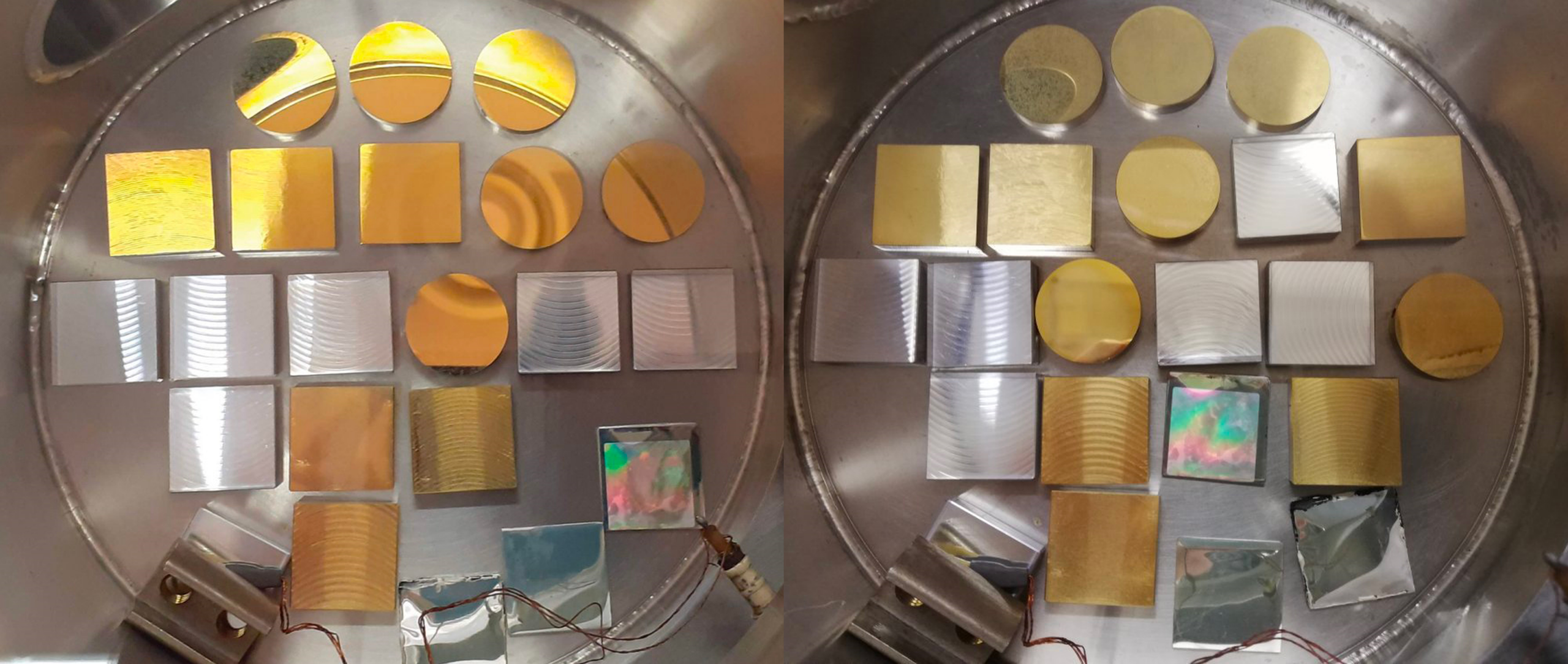
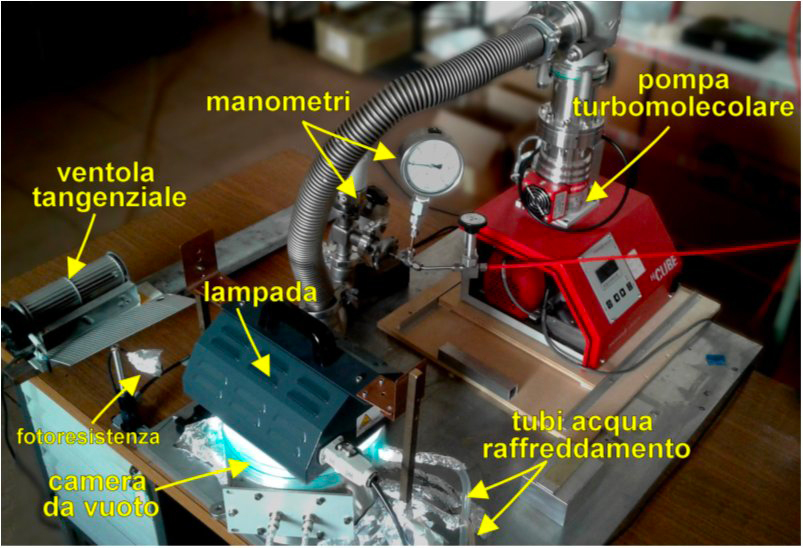
What made the transfer valuable was not only the irradiation itself, but the quality of the evidence produced around it. Two dimensional intensity mapping, supported by calibrated detectors and periodic sample repositioning, improved dose uniformity across the exposed materials. Automatic 24 hour monitoring ensured full traceability throughout long campaigns. The water cooled vacuum chamber, combined with helium thermal management, kept temperatures under control during prolonged exposure while also protecting samples from oxygen contamination.
For Beamide, that precision changed the decision making process. The tests showed clearly, for example, how oxygen accelerates yellowing and delamination, information that directly supports material selection and process choices for optical components. In space hardware, a small degradation can compromise performance after launch. Having reliable qualification data before that point reduces risk, saves development time, and strengthens confidence in the final design.
For ENEA, the project did something equally important. It turned a fusion derived experimental capability into a reusable turnkey UV test bench, with established procedures, calibrations, mapping routines and remote control. A new irradiation source was also developed to better match the extra atmospheric solar UV spectrum, increasing the relevance of future campaigns for industrial users.
This is what successful technology transfer looks like in practice. A facility built around fusion grade rigor moves into aerospace, not by changing its standards, but by proving that those standards create value far beyond fusion. In Frascati, the same discipline used to understand extreme environments is now helping space materials face one of the harshest ones, the Sun itself.