Technologies developed for fusion often solve problems that reach far beyond fusion itself. At the Karlsruhe Institute of Technology, expertise originally built for high field fusion magnets is now helping the MEESST project explore a new approach to atmospheric re entry. The transfer is based on KIT’s know how in high temperature superconductors, especially the HTS CrossConductor, or CroCo, a conductor concept created for very high current density, strong magnetic fields and demanding mechanical conditions. In fusion, these properties are essential. Magnet systems must carry very large currents, operate reliably in extreme environments and keep their performance under stress. CroCo was developed precisely for that kind of challenge, and over time it became a recognised reference within the fusion community.
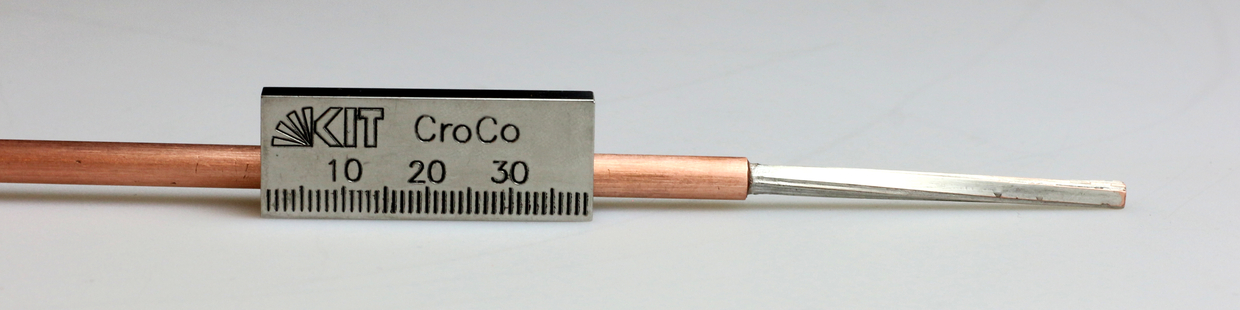
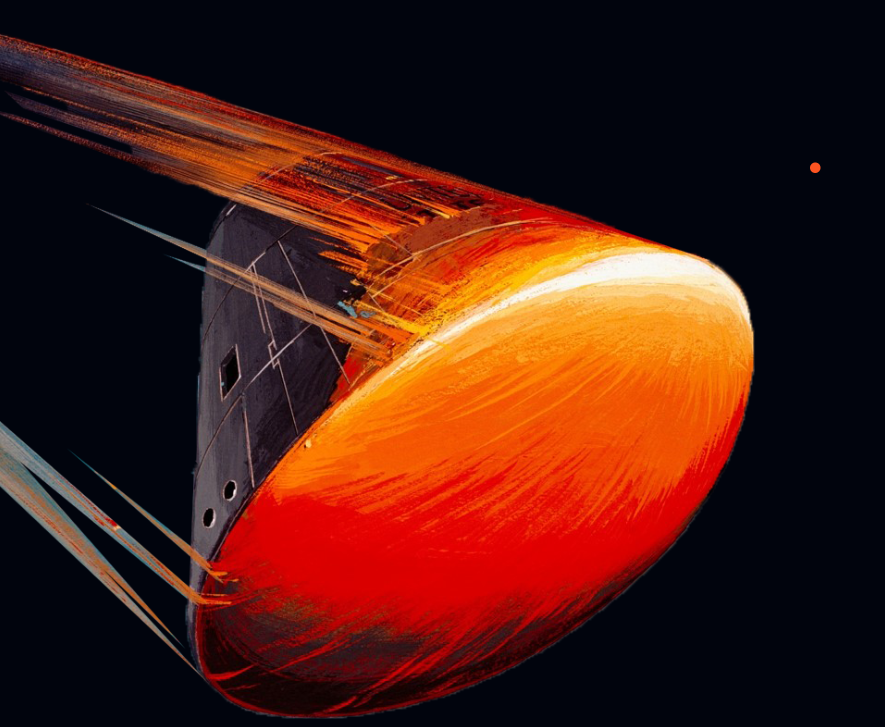
In MEESST, this fusion expertise has moved into the space sector, where the constraints are just as severe, but very different in nature. The project aims to design, build and test a proof of concept magnetic shielding device for atmospheric entry. Its goal is to reduce both thermal loads and radio frequency blackout, two major issues for spacecraft during re entry. This is where the transfer becomes particularly valuable. Conventional copper electromagnets capable of producing Tesla level magnetic fields would be too heavy and too power intensive for realistic space applications. High temperature superconducting technology changes that equation. It makes it possible to design much more compact magnet systems, with far lower mass and lower power demand, while still reaching the field levels needed for magnetic shielding concepts. According to public MEESST material, this approach has shown heat flux mitigation of up to 40 percent for lunar return conditions, and up to 80 percent in more extreme entry scenarios.
KIT’s contribution is not limited to a single conductor concept. It also includes broader expertise in high current HTS cables, magnet design and the handling of superconducting systems under demanding operating conditions. That accumulated knowledge, built in the context of fusion research, gave the MEESST consortium a credible technical basis for developing a superconducting magnet tailored to the strict mass and volume limits of a spacecraft.