Innovation is not contained – it spills over. In Big Science projects, such as ITER, CERN and many others, breakthroughs are especially transferable. Despite serving different scientific missions, these large infrastructures often face similar engineering challenges, so the technologies developed for one can bring solutions to others. It’s a virtuous circle that reduces development risks and, at the same time, stimulates suppliers to innovate and grow their market.
The story of VAC-TRON is a case in point. The Spanish firm developed hermetic feedthrough solutions for ITER under a contract with Fusion for Energy (F4E). This know-how has now made it into a new cutting-edge field. With the support of F4E’s Technology Transfer Programme, VAC-TRON successfully customized their solution for the FAIR particle accelerator in collaboration with GSI and ASG Superconductors.
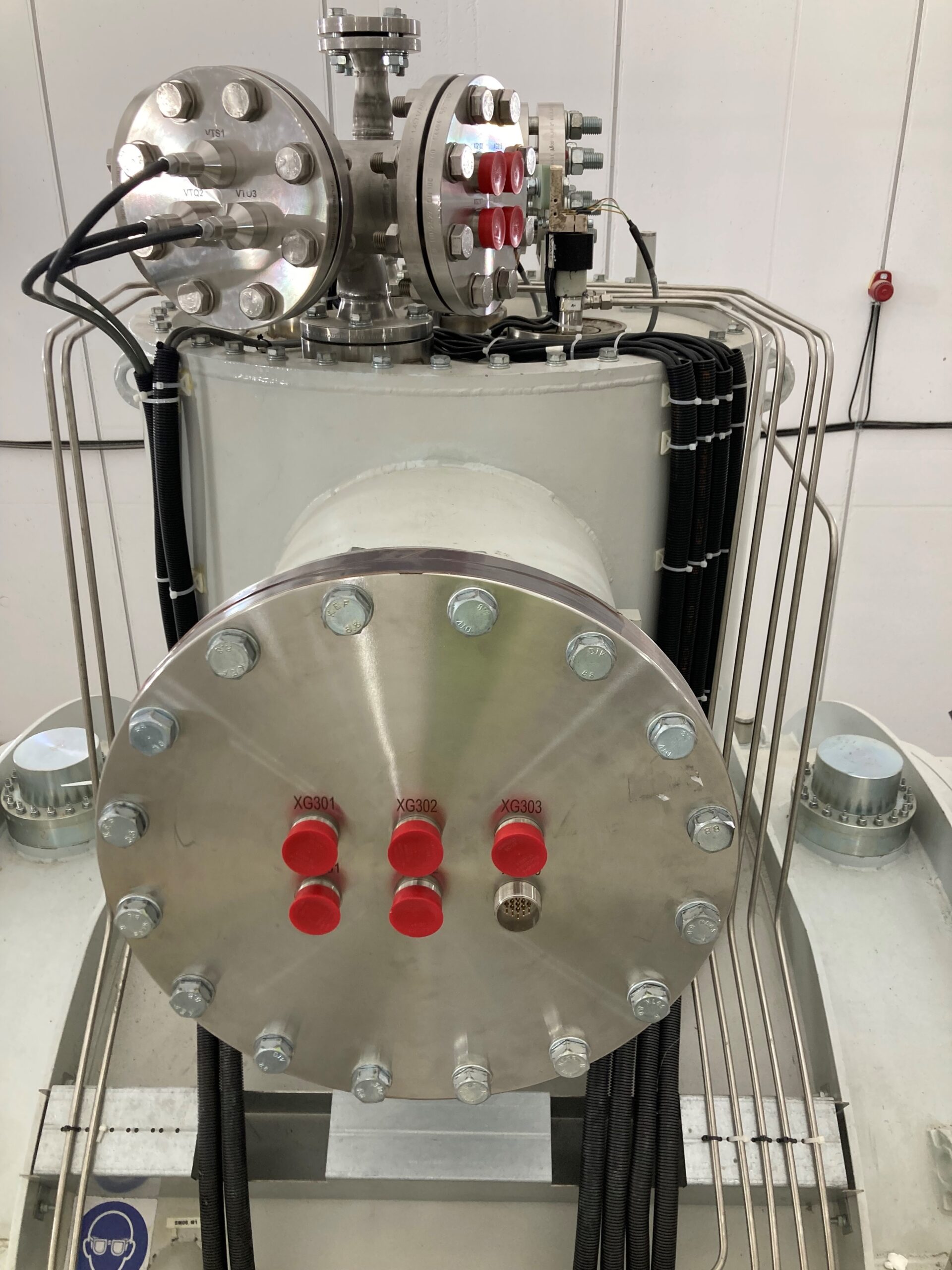
FAIR (Facility for Antiproton and Ion Research) will be one of the world’s largest infrastructures for the study of ions, antiprotons and nuclear matter. The facility is currently under construction in Darmstadt, Germany.
One of its key components is the Super Fragment Separator (Super-FRS), a superconducting magnetic system to accurately guide, focus and separate particle beams. The Super-FRS features numerous diagnostic and protection systems. Their electrical connections must cross vacuum and pressurised helium boundaries while maintaining hermetic sealing, electrical insulation and long-term reliability.
This challenge is also found in ITER, the world’s largest fusion experiment. The diagnostic sensors installed inside its Vacuum Vessel must send electrical signals to the outside, safely crossing the reactor’s pressure boundary. To that end, F4E is providing a 75 feedthroughs adapted to ITER’s extreme environment.
VAC-TRON, a small firm based near Barcelona, took part in the supply chain for the ITER feedthroughs. The company brought expertise in Glass-to-Metal Sealing and gained unique experience. The strict requirements of fusion were an opportunity to refine know-how in fields like materials, manufacturing processes or qualification and testing practices.
These engineering capabilities soon created new opportunities for VAC-TRON. The firm partnered with GSI and ASG Superconductors to provide a feedthrough solution tailored to FAIR’s requirements.
Rather than repurposing a product, VAC-TRON built on its experience in ITER to find adapted solutions for FAIR. The company designed reliable hermetic electrical interfaces, customised to the ultra-high vacuum and radiation environment of FAIR’s next-generation magnetic system. Thanks to a rigorous qualification process, VAC-TRON validated solutions capable of enduring these extreme conditions throughout the lifetime of the installation.
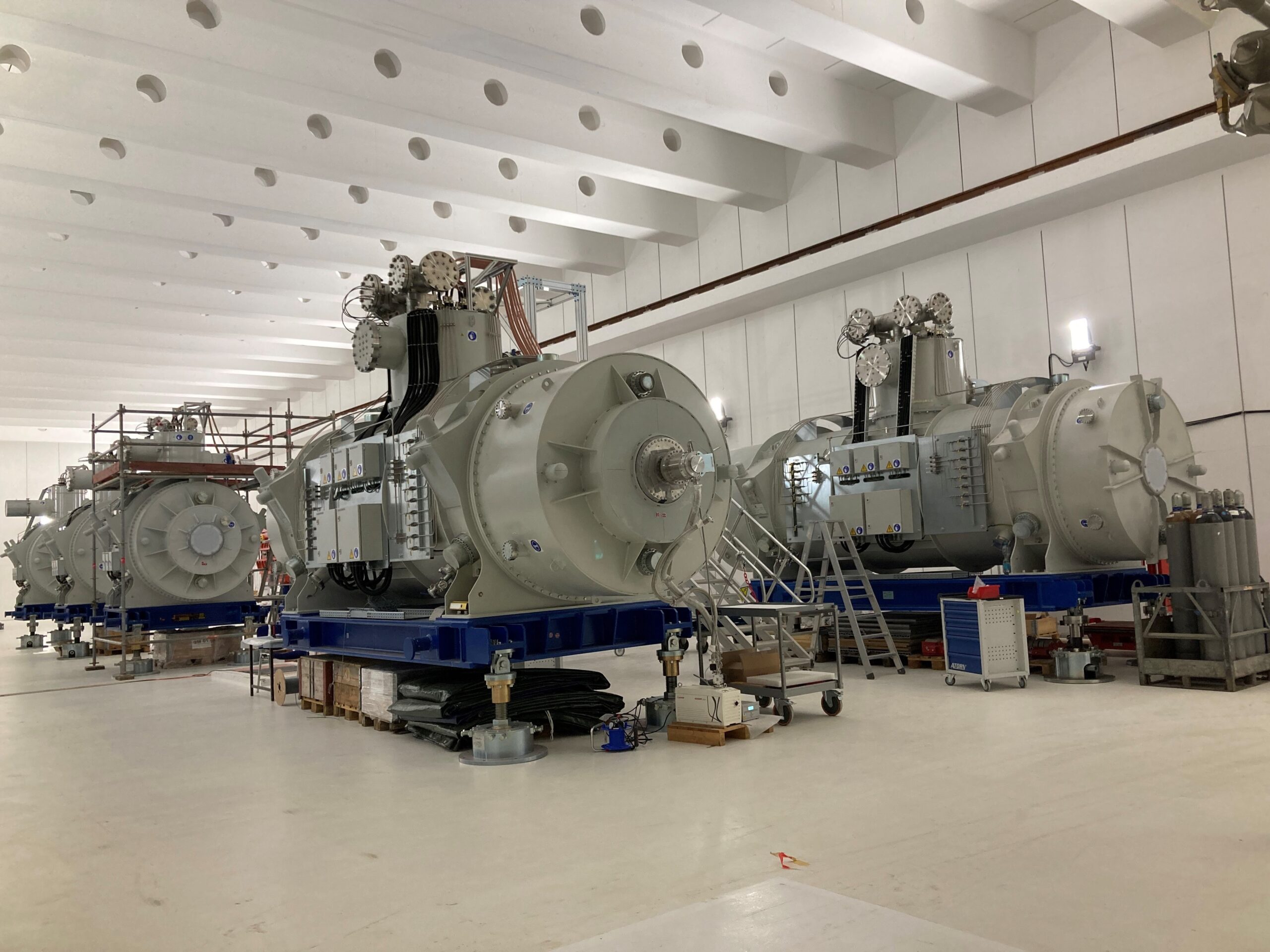
The engineering methodologies developed in fusion therefore proved effective in another demanding field. In fact, this technology has potential applications in other sectors, including aerospace, nuclear instrumentation, cryogenic systems, medicine and advanced industrial monitoring equipment.
The lessons from the project are clear. By tapping into existing engineering knowledge and connecting across sectors, the companies reduced risk and shortened development cycles. A small company in size, VAC-TRON showed how participation in Big Science can strengthen industrial capabilities, open new markets and create value far beyond the original project.