Some technology transfers begin with a device. This one began with a way of thinking. At Universidad Carlos III de Madrid, within the Doctoral Programme in Nuclear Fusion Science and Engineering, researchers were trained to model plasmas from first principles, understand electromagnetic interactions, and work with the analytical discipline that fusion demands. That scientific culture later became one of the foundations of IENAI SPACE, a company now developing compact electric propulsion systems for nanosatellites.
The expertise originated in the EP2 group at UC3M, where Daniel Pérez Grande developed advanced competences in plasma modelling, numerical simulation and charged particle dynamics. Those tools were shaped in a fusion oriented environment, even when applied to space propulsion topics. What moved to industry was not a piece of fusion hardware, but something just as valuable, a rigorous design culture grounded in plasma physics.
That transfer took concrete form in 2019, when Daniel Pérez Grande and two fellow researchers founded IENAI SPACE in Madrid. They saw that many existing propulsion systems were poorly suited to CubeSats and small satellites, where power, mass and volume are tightly constrained. Drawing on fusion derived analytical methods, they developed a new class of electrospray propulsion systems based on conductive molten salt propellants, designed to deliver precise manoeuvring with very low power consumption.
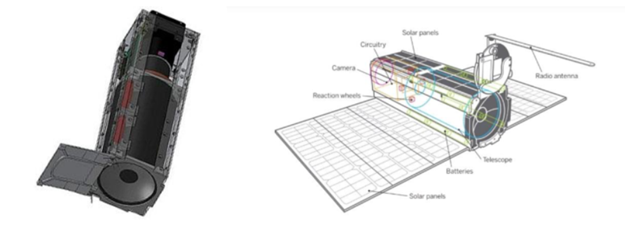
What made the difference was speed with depth. The founders applied first principles modelling and cross disciplinary systems thinking inherited from fusion research to shorten development cycles, reduce prototyping effort and improve overall performance. That same mindset also helped integrate propulsion, power and control within architectures small enough for the new space market. Today, IENAI presents ATHENA as a highly compact electrospray propulsion family engineered for spacecraft that need to go further, for longer.
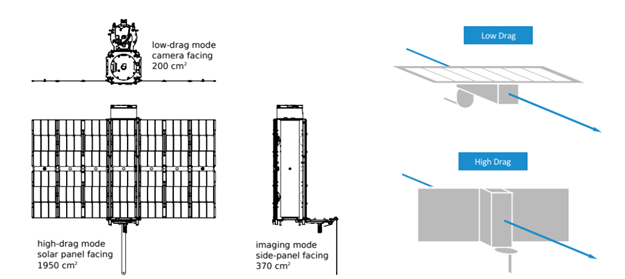
In only a few years, the company has grown to more than 30 professionals, secured more than €10 million in combined public and private investment, and is preparing multiple in orbit demonstrations in 2026. The story is a strong example of competence transfer at its best. Fusion did not simply inspire a new product. It helped shape the scientific discipline, modelling habits and engineering ambition behind a new European space company.