Fusion research forces materials to operate where failure is not an option. Heat, stress and long service times leave very little margin. At SCK CEN in Belgium, that challenge led to the development of a new family of affordable low activation steels designed for nuclear structural components, with better creep resistance, higher strength and a wider ductile range than EUROFER97, the European reference material in this field.
The transfer brought this work to OCAS, the Belgian steel research centre backed by the Flemish Region and ArcelorMittal Belgium. Together, SCK CEN and OCAS combined computational thermodynamics, strength modelling and high throughput experiments to identify the most promising steel grades and refine their processing. The goal was clear, keep the material affordable, keep it compatible with industrial steelmaking, and push performance further where conventional grades start to struggle.
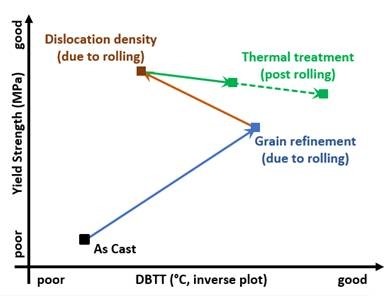
The key improvement came from tuning the chemistry and the heat treatment. By optimising the content of carbonitride formers and tempering conditions, the team created steels with a more favourable microstructure, one that better resists deformation over time at high temperature. In practical terms, that means fewer component failures, longer service windows and a stronger case for future use in both fusion and non fusion sectors that depend on heat resistant structural steels.
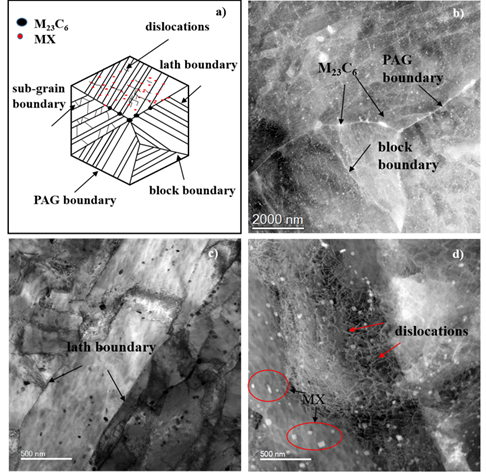
For OCAS, the value is direct. The collaboration opens a path toward commercially relevant steel grades with premium performance. For SCK CEN, it shows that a material born from fusion constraints can travel beyond its original mission and move closer to industrial scale deployment. It is a good example of what technology transfer should do, turn a materials challenge from advanced research into a product opportunity.