Some technologies are built for environments where mistakes are simply not an option. This is the case for TExR, Telerobotics Enhanced by eXtended Reality, a solution that grew out of fusion research and is now opening new possibilities for nuclear decommissioning.
Its story begins in fusion, where maintenance operations must be planned with extreme care. Inside machines such as WEST and ITER, every intervention takes place in a setting defined by complexity, radiation constraints and very limited room for error. Engineers need to know in advance whether a component can be reached, whether a tool can move safely, whether a gesture is feasible, and what might happen if contact occurs at the wrong angle or in the wrong sequence.
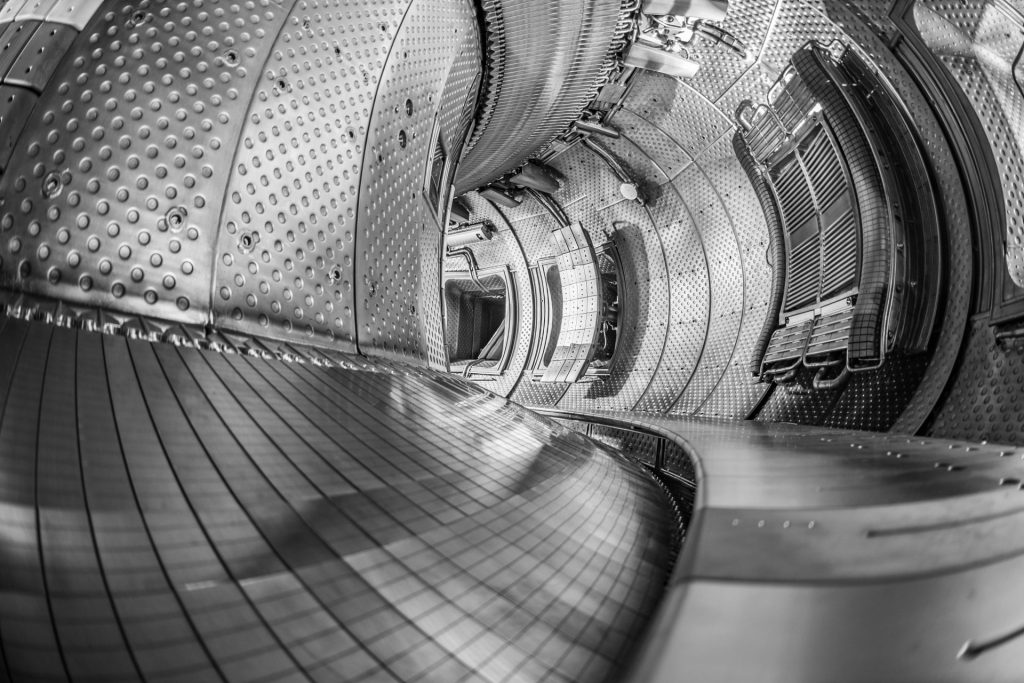
To answer these questions, CEA IRFM worked on advanced remote handling approaches built around XDE, the eXtensible Dynamics Engine. This real time physical simulation engine was designed to reproduce motion, interaction and contact with a high level of realism. It made it possible to prepare and test operations in demanding virtual environments before moving to real intervention scenarios.
That capability has now found a new path beyond fusion through Atom XR, a startup created to bring these immersive simulation tools into industrial use. The idea is powerful in its simplicity. Before sending an operator or a robotic system into a hazardous area, create a virtual replica of the environment, simulate the task, validate the sequence, identify the risks and train the operator. In sectors where access is difficult and safety is critical, this changes the way work is prepared.
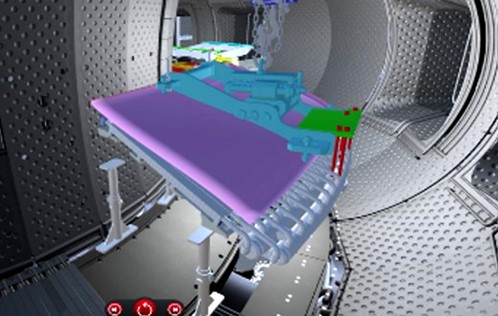
This is where Haption enters the story. Through this technology transfer, XDE has been integrated with Haption’s Virtuose 6D master arm for remote handling applications. The result is more than a software connection. It is a step toward a more intuitive and more capable teleoperation system, where robotics and extended reality work together to give the operator a better understanding of space, motion and contact.
In practical terms, this means the operator can interact with a simulated scene in real time, with a level of precision that improves decision making and task execution. The system can support interactive manipulation, help prevent collisions and introduce virtual guides that make complex movements easier to perform. These are not marginal gains. In nuclear decommissioning, they can make the difference between a difficult task and a manageable one.
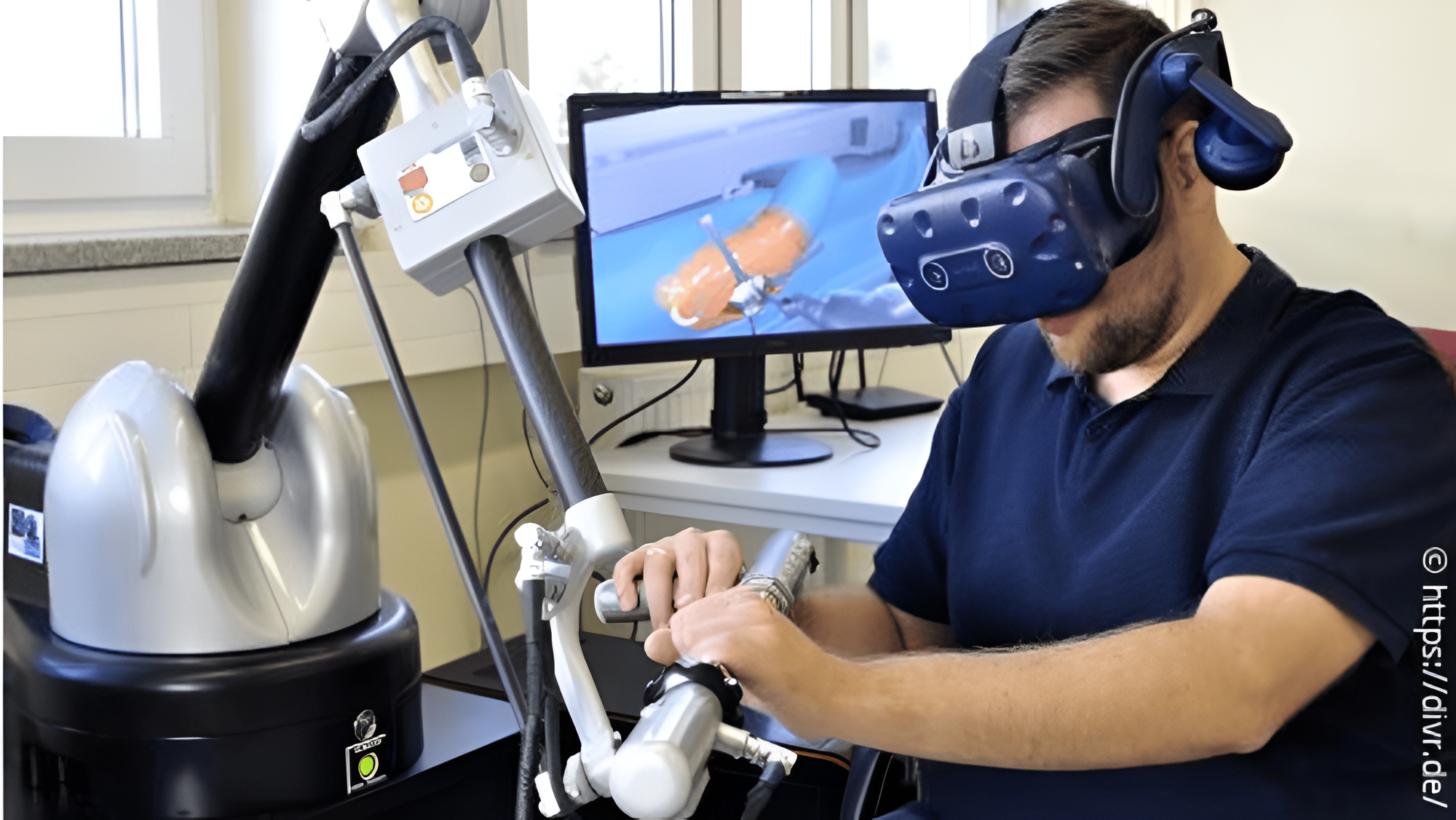
The transfer is especially relevant for nuclear decommissioning, where many operations share the same constraints that shaped the technology in fusion. Work must often be carried out remotely, the environment can be hazardous, access is restricted and precision matters at every step. Under these conditions, the value of preparing interventions in a realistic virtual setting becomes very clear.
For Haption, the integration enriches its offering with new extended reality capabilities and strengthens the value of its robotic platforms in one of the most demanding industrial markets. For Atom XR, it creates a first concrete business case in nuclear decommissioning and shows that technology rooted in fusion can respond to urgent industrial needs beyond the fusion sector.
The broader impact is just as important. Better preparation can reduce uncertainty before an intervention begins. It can shorten task execution time, improve operator safety and help avoid costly errors in complex dismantling projects. It can also make remote operations more accessible, more reliable and easier to scale.
This success story is a strong example of what technology transfer can achieve when a solution developed for fusion finds a new role in another high constraint environment. What started as a response to the demanding realities of fusion maintenance has become a practical tool for safer and smarter nuclear decommissioning.