The involvement of small and medium enterprises (SME) in fusion brings win-win opportunities. Their specialised skills are key to build advanced technologies for projects like ITER, while the demanding requirements of fusion push them to innovate, grow their know-how and enter new markets. VIA electronic, a German SME, illustrates this dynamic, with a story that bridges from the ITER supply chain to the private fusion market.
The company’s expertise is centred on custom Low-Temperature Co-fired Ceramic (LTCC). This technique allows the production of compact electronics by joining layers of conductor embedded within a ceramic structure. Its advantages include excellent insulation, thermal stability and mechanical strength.
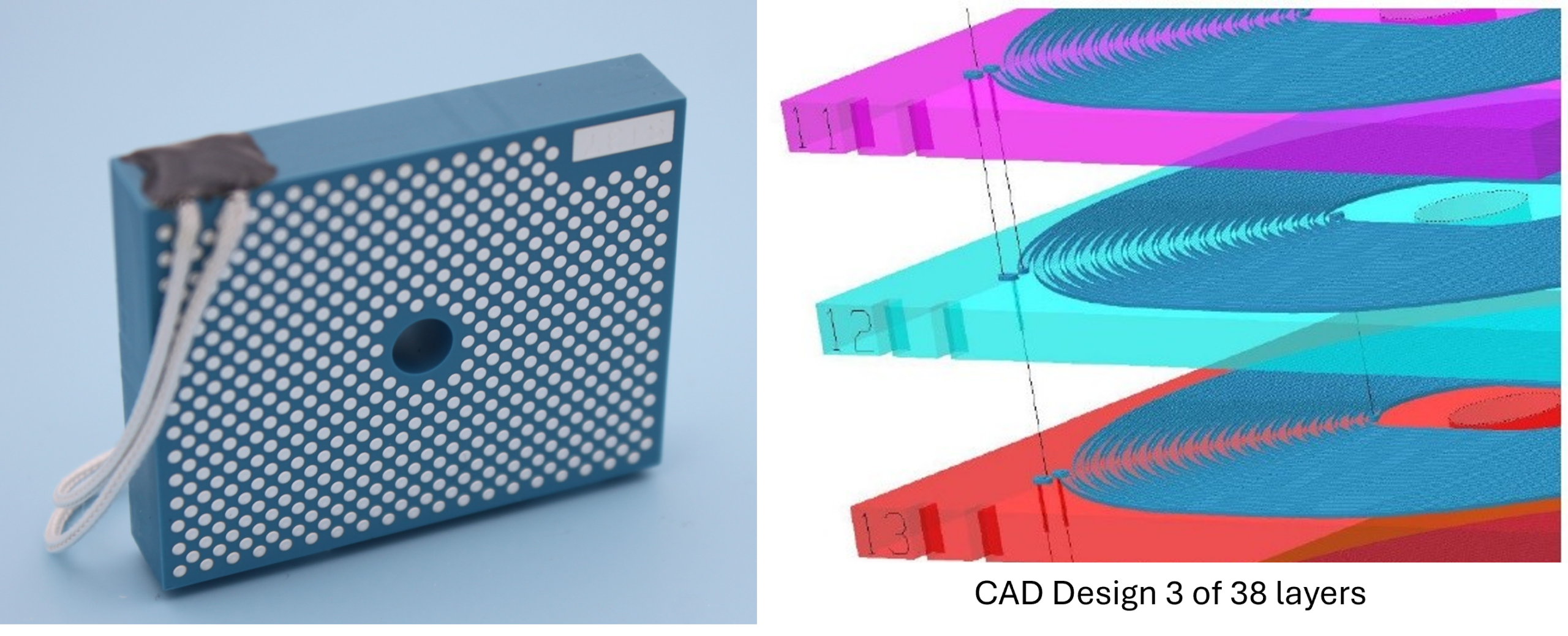
Fusion for Energy (F4E) and VIA electronic worked together for years to develop a technology to manufacture different types of magnetic sensors in LTCC technology for ITER. These small coils will be placed inside the world’s largest fusion reactor to measure the magnetic field and help track the plasma’s behaviour.
The collaboration with F4E began as exploratory research and evolved through a series of development contracts. The firm gradually improved the performance, robustness and manufacturability of the sensors. The process resulted in a mature product that met the standards of ITER. In parallel, it helped strengthen a culture of quality, precision and compliance within VIA Electronic.
The experience in ITER gave VIA electronic a first-mover position in the emerging fusion sector. The company’s know-how can be an asset to projects relying on state-of-the-art magnetics diagnostic tools. For this reason, F4E’s Technology Transfer Programme offered VIA electronic guidance in shaping a long-term market orientation.
At present, the efforts are starting to pay off. One of the first to express interest was ENI, the Italian multinational energy company, that recently signed an agreement with VIA electronic. ENI has began exploring the application of LTCC in different fields, including fusion diagnostic technologies.
In addition, fusion companies such as Proxima Fusion have also shown interest in the technology. This growing attention reflects the potential of this technology. It also shows how, regardless of their size, F4E’s suppliers can grow and play a big role in high-value markets.